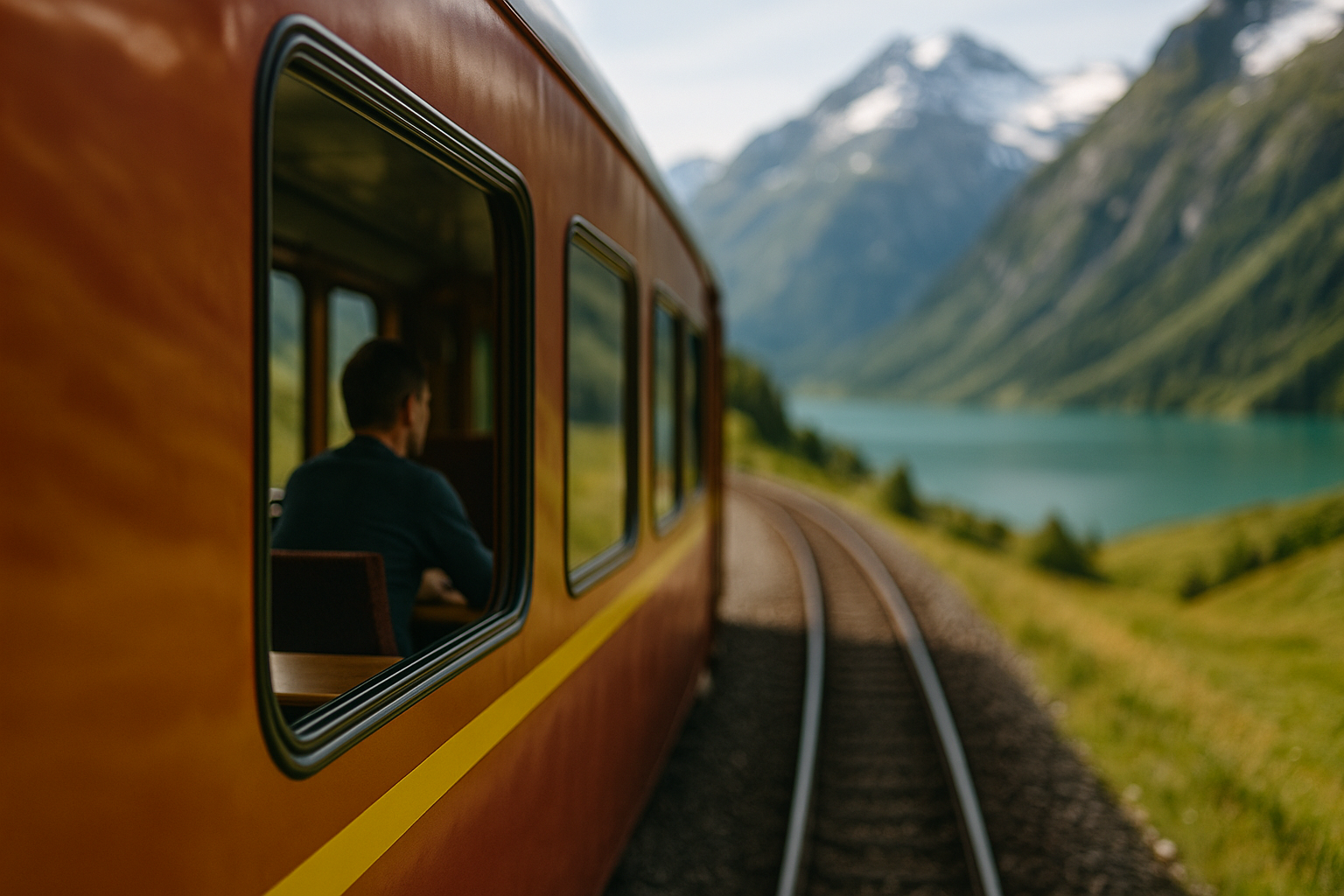
There’s something almost magical about watching the world unfold from a train window. Mountains rise slowly into view, coastlines reveal themselves curve by curve, and landscapes shift from desert to forest to glacier without you lifting a finger. While planes get you there faster and cars offer more control, trains give you something neither can match: the journey itself becomes the destination.
The world’s most scenic train rides aren’t just about transportation. They’re carefully engineered experiences that showcase nature’s greatest hits, from Swiss Alpine passes to Norwegian fjords, from Rocky Mountain heights to tropical coastal stretches. These routes were often built against incredible odds, carved through terrain that seemed impossible to cross, and today they offer passengers front-row seats to some of Earth’s most breathtaking landscapes.
The Glacier Express: Switzerland’s Slowest Express Train
Calling itself the “slowest express train in the world” isn’t typically a marketing strategy, but the Glacier Express wears this title proudly. This eight-hour journey between Zermatt and St. Moritz covers just 180 miles, deliberately crawling through the Swiss Alps to ensure passengers don’t miss a single dramatic vista.
The route crosses 291 bridges and passes through 91 tunnels, climbing to the Oberalp Pass at over 6,670 feet above sea level. Floor-to-ceiling panoramic windows transform the entire train into a moving observation deck, offering unobstructed views of the Matterhorn, Rhine Gorge (often called the “Swiss Grand Canyon”), and countless Alpine villages that look like they’ve been plucked from a storybook.
What makes this journey particularly special is how it showcases Switzerland’s geographic diversity. You’ll start among glacier-carved valleys, climb through snowcapped peaks, descend past mountain lakes so blue they seem artificial, and finish in forests thick with pine. The route essentially compresses Switzerland’s greatest natural hits into a single day, all while you sip wine and enjoy a multi-course meal in the dining car.
Best Time to Ride
Winter offers a fairy-tale landscape of snow-blanketed peaks and frozen waterfalls, while summer reveals lush green meadows dotted with wildflowers and grazing cattle. Spring and fall provide shoulder-season advantages like fewer crowds and dramatic weather systems rolling through the mountains, creating constantly changing light conditions photographers dream about.
The Bergen Railway: Norway’s Gateway to the Fjords
Norway’s Bergen Railway might be one of the highest mainline railways in Northern Europe, but it’s the descent toward Bergen that steals the show. This seven-hour journey from Oslo to Bergen climbs to 4,058 feet at the Hardangervidda plateau before dropping toward the fjord-carved western coast.
The landscape transitions are remarkable. Oslo’s gentle forests give way to increasingly dramatic terrain until you’re crossing Europe’s largest mountain plateau, a stark, beautiful wilderness of exposed rock, scattered lakes, and hardy vegetation. Then comes the descent through the Flam valley, where waterfalls seem to pour from every cliff face and tiny farms cling to impossibly steep hillsides.
According to travel experts who’ve documented the world’s most scenic routes, the Bergen Railway stands out not just for its natural beauty but for how accessible it makes Norway’s remote interior. Many passengers combine this journey with the Flam Railway, a side trip that descends 2,838 feet in just 12.4 miles through one of Norway’s steepest valleys.
Engineering Marvel
Built between 1875 and 1909, this railway required incredible engineering to survive Norway’s brutal winters. Snow sheds protect vulnerable sections, and the line’s builders had to solve the challenge of maintaining a route that spends months each year buried under deep snow. That same snow, however, creates some of the journey’s most stunning winter scenery.
The Rocky Mountaineer: Canada’s Luxury Wilderness Experience
The Rocky Mountaineer takes a different approach to scenic rail travel. Operating only during daylight hours, this Canadian luxury train makes overnight stops so passengers never miss a moment of the spectacular Rocky Mountain scenery. The “all killer, no filler” philosophy means every mile delivers dramatic landscapes.
Multiple routes are available, but the journey from Vancouver to Banff through the Canadian Rockies consistently ranks among the world’s most spectacular train experiences. You’ll follow the Fraser River through Hell’s Gate, where the canyon narrows to just 110 feet wide, then climb into the Rockies proper, where jagged peaks tower above turquoise glacial lakes.
Wildlife sightings are common. Bears, elk, bighorn sheep, and eagles appear regularly along the route, and the train’s expert staff provides commentary about the landscape’s geology, history, and ecology. The experience feels like having a documentary film crew narrating your personal nature film, except you’re traveling through it rather than watching from a couch.
The glass-domed coaches deserve special mention. Unlike standard train windows, these panoramic domes curve overhead, offering views not just to the sides but upward toward mountain peaks and towering rock walls. On routes through the spiral tunnels, you can actually watch the train’s rear cars circling above as the front cars exit below, a disorienting but fascinating engineering solution to extreme elevation changes.
The Coastal Classic: Alaska’s Seward to Anchorage Journey
Alaska Railroad’s Coastal Classic route packs an impressive variety of landscapes into just four hours. Departing from the fishing town of Seward, the train hugs Turnagain Arm, a fjord-like extension of Cook Inlet famous for having one of North America’s largest tidal ranges.
The route showcases Alaska’s characteristic drama: glaciers calving into the sea, temperate rainforests thick with Sitka spruce, mountains that rise straight from the water, and vast expanses of wilderness where human development seems like a distant rumor. Beluga whales sometimes appear in Turnagain Arm during summer months, and Dall sheep dot the cliffsides above the tracks.
What sets this journey apart is its accessibility to genuine wilderness. Many scenic train routes have been tamed by development over the decades, but Alaska’s landscape remains largely untouched. The train passes through Chugach National Forest, where grizzly bears outnumber people and the ecosystem functions much as it has for thousands of years.
Seasonal Variations
Summer brings 20-hour days with endless golden-hour lighting, while fall transforms the landscape with brilliant autumn colors and increased wildlife activity as animals prepare for winter. Winter operations are limited, but the snow-covered landscape and possibility of northern lights make those rare cold-weather journeys unforgettable.
The Ghan: Australia’s Red Center Crossing
Named after Afghan camel drivers who once traversed this route, The Ghan offers something completely different: a journey through Australia’s vast, empty interior. The three-day trip from Adelaide to Darwin (or reverse) crosses 1,850 miles of desert, tropical savanna, and everything in between.
This isn’t about dramatic mountain peaks or coastal vistas. Instead, The Ghan showcases the subtle beauty of Australia’s outback, vast red desert landscapes that stretch to impossibly distant horizons, ancient rock formations that glow orange in the setting sun, and night skies so dark and clear that the Milky Way looks like a cloud of light overhead.
The journey includes several extended stops where passengers disembark for excursions. These might include helicopter rides over remote gorges, visits to Aboriginal cultural centers, or walks through landscapes that haven’t changed substantially in millions of years. It’s this combination of train travel and curated experiences that makes The Ghan special.
As travel writers covering exceptional rail journeys note, The Ghan represents a particular type of scenic experience where the landscape’s power comes from its emptiness rather than its dramatic features. You might watch the same flat desert horizon for hours, then suddenly spot a lone dingo or mob of kangaroos, reminding you that this “empty” landscape teems with life adapted to extremes.
The West Highland Line: Scotland’s Rugged Beauty
Scotland’s West Highland Line from Glasgow to Mallaig might not cover the longest distance, but it packs extraordinary variety into its route. The journey passes through landscapes that defined Scottish identity: brooding moorlands, mirror-still lochs, rugged mountains, and eventually the Atlantic coast.
The Glenfinnan Viaduct has achieved fame beyond rail enthusiasts thanks to its appearance in Harry Potter films, but the real magic extends far beyond this single landmark. The route climbs onto Rannoch Moor, one of Europe’s last great wildernesses, where peat bogs and scattered lochs create a landscape that feels primeval and slightly unsettling in its isolation.
Descending toward the coast, the train follows Loch Eil and then curves around to reveal stunning views of the Small Isles: Rum, Eigg, Muck, and Canna. On clear days, the Isle of Skye appears on the horizon, its Cuillin mountains forming a jagged silhouette against the sky. The journey ends in Mallaig, a working fishing port that serves as a gateway to Scotland’s western islands.
Historical Significance
Built in the 1890s, this railway required extraordinary effort to construct through such challenging terrain. Workers faced brutal weather, unstable ground on the moor, and the technical challenge of crossing countless streams and lochs. The engineering solutions they devised, including the graceful curve of the Glenfinnan Viaduct, have become landmarks in their own right.
Planning Your Scenic Rail Journey
Choosing among the world’s great scenic train routes depends on what kind of landscape moves you. Alpine enthusiasts gravitate toward Switzerland’s Glacier Express or Norway’s mountain routes. Those seeking wilderness remoteness might prefer Alaska or Scotland. Desert lovers will find The Ghan incomparable, while fans of coastal scenery have numerous options from Norway’s fjords to America’s scenic routes.
Timing matters significantly. Many routes offer completely different experiences depending on season. Switzerland’s Alpine routes transform from green summer meadows to winter wonderlands. Norway’s midnight sun creates surreal 24-hour daylight in summer, while winter brings the possibility of northern lights. Alaska’s dramatic seasonal changes mean summer and winter journeys feel like different routes entirely.
Budget considerations vary widely. Luxury options like the Rocky Mountaineer include gourmet meals, premium service, and overnight hotel stays, with prices reflecting these amenities. Meanwhile, routes like Scotland’s West Highland Line or Norway’s Bergen Railway operate as regular passenger services with relatively affordable tickets. Both approaches have merit; sometimes the simple pleasure of a window seat on a regular train through spectacular scenery is perfect.
Resources like comprehensive guides to scenic train travel can help you compare options and understand what each journey offers. Consider not just the train ride itself but the destinations at each end and whether you want to combine rail travel with other exploration.
Making the Most of Your Journey
Window selection matters more than you might think. Research your chosen route to understand which side offers better views for which segments. Some journeys switch prime viewing sides partway through, while others favor one side consistently. Many scenic trains offer dome cars or observation carriages that solve this problem by providing views in all directions.
Photography requires planning. Window glare, reflections, and motion blur challenge even experienced photographers. Polarizing filters help with glare, fast shutter speeds freeze motion, and shooting slightly forward or backward (rather than directly perpendicular to the train’s motion) reduces blur. Some trains make photo stops at particularly scenic locations, solving the technical challenges entirely.
Pack appropriately for the journey length and style. Luxury multi-day trips require different preparation than four-hour regional trains. Comfortable clothing, good walking shoes for station stops, layers for varying temperatures, and entertainment for stretches between highlights all contribute to enjoyment.
Consider combining train journeys with other forms of travel to create richer experiences. Many scenic routes connect to ferry services, making island hopping possible. Others link to national parks or UNESCO World Heritage sites worth exploring. The train journey might be the highlight, but the destinations it connects often deserve time too, much like how thoughtful travel planning enhances any adventure.
The world’s most scenic train rides offer something increasingly rare in modern travel: enforced slowness. You can’t rush a train journey, can’t take shortcuts or speed ahead to the next attraction. You’re committed to the pace the tracks and timetable dictate, which turns out to be exactly the right speed for absorbing landscapes that took millions of years to form. Whether you’re watching Swiss peaks slide past panoramic windows or crossing Australia’s red center under endless skies, these journeys remind us that sometimes the best way to see the world is from a comfortable seat, moving just fast enough to keep the scenery changing, but slow enough to actually see it.

Leave a Reply