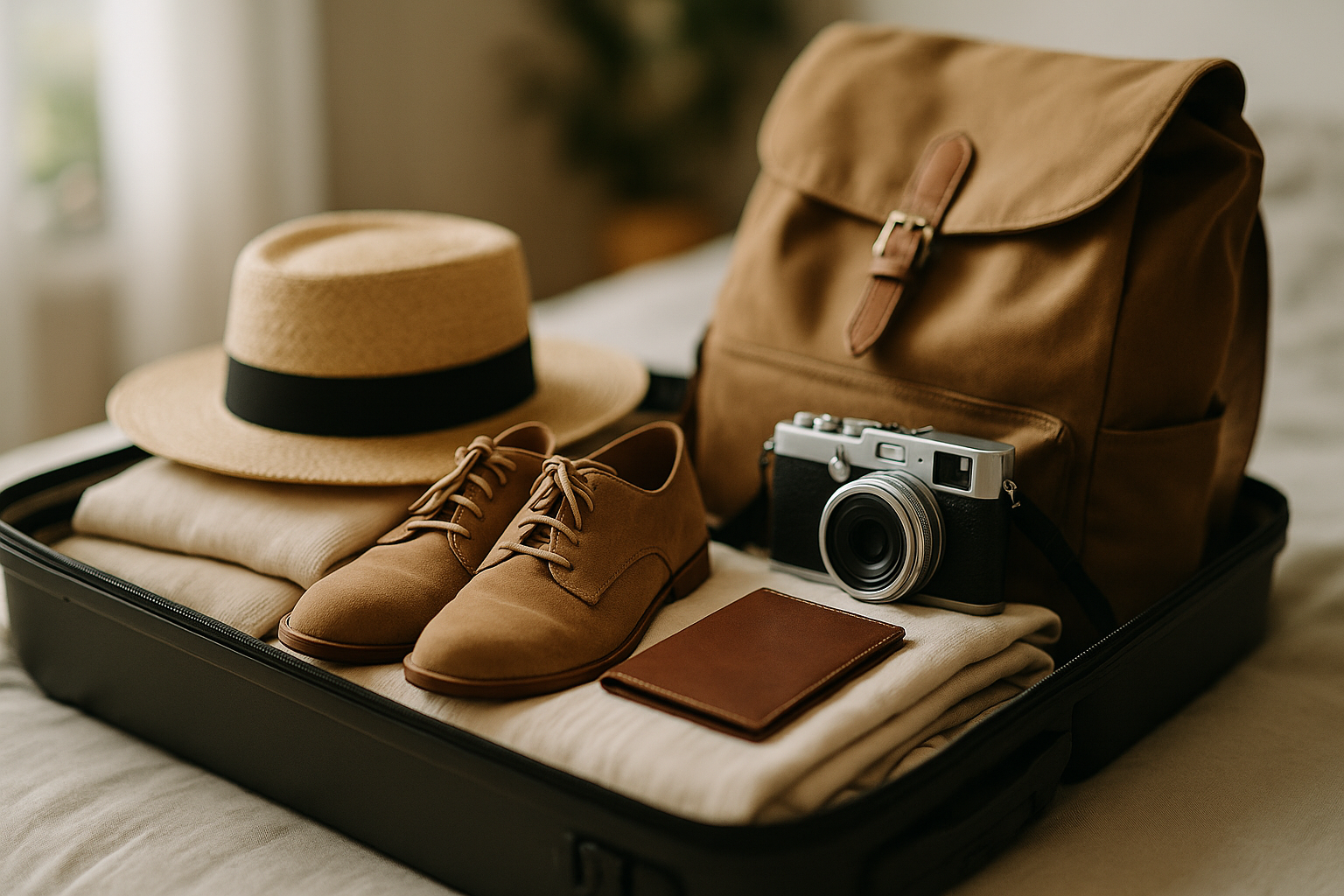
Your suitcase sits open on the bed, mocking you with its vast emptiness. That flight confirmation email says departure is in 48 hours, yet you haven’t packed a single item because you’re paralyzed by questions. What if you forget something crucial? What if you overpack and can’t lift your bag? What if the weather changes, your plans shift, or you end up looking like you packed in the dark? Here’s what experienced travelers know: packing isn’t about cramming everything you own into luggage. It’s about strategic selection, smart organization, and understanding exactly what you need for your specific journey.
Whether you’re heading out on a weekend getaway or embarking on a months-long adventure, the principles of effective packing remain consistent. The difference between travelers who breeze through airports with a single carry-on and those struggling with three overstuffed bags isn’t luck or minimalism taken to extremes. It’s methodology. This guide breaks down everything you need to know about packing efficiently, organized by travel type, destination, and duration. By the end, you’ll have a systematic approach that eliminates both overpacking anxiety and that sinking feeling when you realize you left something essential at home.
Understanding Your Travel Type and Packing Needs
Not all trips require the same packing strategy. A business traveler heading to corporate meetings in Chicago needs completely different items than someone backpacking through Southeast Asia or a family driving to a beach resort. Before you touch a single piece of clothing, identify your travel category because this determines everything else.
Business travelers prioritize wrinkle-resistant clothing, professional accessories, and reliable tech gear. Your packing list centers on versatile pieces that mix and match effortlessly, creating multiple professional outfits from minimal items. Weekend leisure travelers can afford to be more casual but still benefit from the capsule wardrobe approach. Adventure and outdoor travelers need specialized gear, weather-appropriate layers, and durable items that withstand rough conditions. Long-term travelers and digital nomads require a completely different mindset, focusing on versatile basics that work across multiple climates and cultures.
Family travel introduces additional complexity with kids’ needs, entertainment items, and safety essentials. Cruise passengers face unique restrictions and formal dress codes. Each category has specific requirements, and trying to use a one-size-fits-all approach leads to either overpacking or critical omissions. Once you’ve identified your travel type, you can build your packing list strategically rather than throwing random items into your bag and hoping for the best.
The Foundation: Choosing the Right Luggage
Your luggage choice fundamentally shapes what and how you pack. This decision isn’t about brand names or trendy colors. It’s about matching your bag to your travel style, destination requirements, and personal mobility needs. The classic debate between carry-on only and checked luggage has valid arguments on both sides, and the right answer depends entirely on your specific circumstances.
Carry-on adherents enjoy significant advantages: no baggage fees, no waiting at carousels, no risk of lost luggage, and increased mobility during connections. For trips lasting one to two weeks, experienced packers can absolutely manage with carry-on only by following strategic packing methods. However, carry-on restrictions limit liquid quantities, prohibit certain items, and require more careful planning. If you’re traveling with specialized equipment, need multiple shoe options, or simply value having more choices available, checked luggage makes sense.
Consider the backpack versus rolling suitcase question honestly. Backpacks offer superior mobility on uneven terrain, crowded public transportation, and destinations with lots of stairs or cobblestone streets. Rolling suitcases preserve your back and shoulders, present a more professional appearance, and generally offer better organization systems. Hybrid bags with both backpack straps and wheels provide versatility but often compromise on both functions. The terrain and transportation methods at your destination should drive this decision more than aesthetic preferences.
For longer journeys or those requiring diverse clothing options, a checked bag plus personal item combination works well. Your checked bag carries bulk items, extra shoes, and toiletries without size restrictions. Your personal item holds travel documents, electronics, medications, one change of clothes, and anything irreplaceable. This redundancy protects you if checked luggage gets delayed while maintaining the convenience of bringing everything you need. Just like smart travelers plan their routes carefully using resources such as road trip planning guides, choosing appropriate luggage requires considering your entire journey, not just the destination.
The Capsule Wardrobe Approach for Efficient Packing
Most people pack as if they’re moving permanently, bringing outfit options for every conceivable scenario. This approach guarantees overpacking and guarantees you’ll wear the same favorite items repeatedly anyway. The capsule wardrobe method flips this thinking entirely: pack fewer items that work together in multiple combinations, creating numerous outfit possibilities from minimal pieces.
Start with a cohesive color palette. Choose one or two neutral base colors like black, navy, gray, or khaki, then add one or two accent colors that coordinate. When everything in your suitcase works together chromatically, any top pairs with any bottom, exponentially increasing your outfit options. Six tops and four bottoms in coordinating colors create 24 different combinations. Add a couple of layering pieces, and you’ve got outfit variety for two weeks without checking a bag.
Select versatile pieces that transition between contexts. A simple black dress works for sightseeing with sneakers and a day bag, then transforms into dinner attire with heels and jewelry. Dark jeans pair with t-shirts for casual days and blazers for nicer evenings. Lightweight cardigans or jackets add warmth and visual interest without consuming luggage space. The goal isn’t deprivation but strategic selection of hardworking items rather than single-purpose pieces.
Apply the “wear it three ways” test before packing any item. If you can’t envision wearing that piece in at least three different outfit combinations or contexts, it doesn’t earn space in your luggage. This rule ruthlessly eliminates “just in case” items that typically remain unworn throughout trips. Those who have mastered effective packing techniques understand that versatility matters more than variety.
Mastering Packing Techniques That Maximize Space
Even with the perfect capsule wardrobe, poor packing execution wastes space and creates wrinkled messes. The method you use to arrange items in your luggage dramatically affects capacity, organization, and garment condition upon arrival. Several techniques exist, each with specific advantages for different items and travel styles.
Rolling clothes remains the gold standard for maximizing space and minimizing wrinkles in casual fabrics like t-shirts, jeans, workout clothes, and cotton dresses. Lay the garment flat, smooth out wrinkles, fold sleeves inward, then roll tightly from bottom to top. Rolled items pack more efficiently than folded ones, reveal their contents at a glance, and stay relatively wrinkle-free. For an even tighter roll, use the military or ranger roll technique where you create a pocket at one end, then roll and tuck the garment into its own pocket, creating a compact, self-contained bundle.
Formal wear and structured garments require different handling. Button-up shirts and blouses benefit from the bundle wrapping method: lay your largest, most wrinkle-prone item flat, then layer progressively smaller garments on top, wrapping everything around a central core object like a toiletry bag. This technique eliminates fold creases because garments curve around the core rather than creasing sharply. Alternatively, use tissue paper or dry cleaning bags between layers of folded dress clothes to reduce friction and wrinkles.
Packing cubes revolutionized luggage organization by creating compartmentalized systems within your suitcase. Assign each cube a category: tops in one, bottoms in another, undergarments and socks in a third, workout gear in a fourth. Compression packing cubes go further, featuring zippers that compress contents to a fraction of their normal volume. These work brilliantly for bulky items like sweaters or puffy jackets. The organizational benefit exceeds even the space savings because you can locate specific items instantly without excavating your entire bag. If you’re the type who appreciates systematic organization in other areas like planning your weekly schedule, packing cubes provide that same satisfying structure for your luggage.
Don’t overlook dead space opportunities. Shoes consume significant volume but contain hollow interior space perfect for stuffing socks, chargers, or small accessories. The gap between rolled clothes creates space for belts, which can also line the perimeter of your suitcase. Necklaces threaded through straws prevent tangling. Every cubic inch counts when packing efficiently.
Toiletries and Liquids: Navigating Restrictions and Minimizing Bulk
Toiletries trip up even experienced packers because they’re simultaneously essential and highly restricted, especially for carry-on travelers. The TSA’s 3-1-1 rule allows liquids, gels, and aerosols in containers of 3.4 ounces or less, all fitting in a single quart-sized clear plastic bag. This limitation forces creative solutions and smart product selection.
Solid alternatives eliminate liquid restrictions entirely. Shampoo bars, conditioner bars, solid perfume, toothpaste tablets, and bar soap take up minimal space, last for weeks, and sail through security without a second glance. Many solid products actually outperform their liquid counterparts and reduce plastic waste. For items without solid alternatives, transfer small amounts into TSA-approved travel containers rather than bringing full-sized bottles. You’re traveling for days or weeks, not months. You need far less product than you think.
Consider your destination’s amenities before packing toiletries. Most hotels provide basic shampoo, conditioner, soap, and lotion. Many offer hairdryers, eliminating a bulky item. If you’re staying in vacation rentals or with friends, ask what’s available before duplicating items unnecessarily. For extended trips, buying full-sized products at your destination often makes more sense than trying to pack months’ worth of toiletries from home.
Organize toiletries strategically to prevent disasters. Double-bag anything that might leak. Place liquids in a waterproof pouch separated from clothing and electronics. Pack a small first-aid kit with bandages, pain relievers, anti-diarrheal medication, and any prescription medications you need. Keep medications in original labeled containers and carry copies of prescriptions for anything essential. Comprehensive packing resources like detailed packing checklists help ensure you don’t forget critical health and hygiene items.
Electronics, Documents, and Travel Essentials
Technology has simultaneously simplified and complicated travel. Modern travelers carry phones, tablets, laptops, cameras, e-readers, and all their corresponding chargers and accessories. Managing this electronic ecosystem requires thoughtful organization to prevent tangled cables, dead batteries, and security checkpoint delays.
Consolidate charging with multi-device cables and portable power banks. USB-C cables that work for multiple devices reduce the number of chargers needed. A compact power strip lets you charge several devices from a single outlet, crucial in hotel rooms with limited plugs. Portable battery packs keep phones alive during long travel days without hunting for outlets. Remember that different countries use different outlet configurations, so pack appropriate adapters for your destinations. Universal travel adapters work globally and consolidate multiple regional adapters into one device.
Protect electronics in padded cases or dedicated compartments. Never pack valuable electronics in checked luggage where they’re vulnerable to theft and rough handling. Keep laptops, tablets, and cameras in your carry-on or personal item. Back up important data before traveling and consider travel insurance that covers expensive electronics.
Document organization prevents travel disasters. Keep physical and digital copies of your passport, driver’s license, travel insurance, accommodation confirmations, and emergency contacts. Store digital copies in cloud storage accessible from any device, and email copies to yourself. Carry at least one backup credit card separate from your primary wallet. Write down important phone numbers because dead phone batteries shouldn’t leave you unable to contact your bank or embassy in emergencies. For international travel, check passport validity requirements as many countries require six months of validity beyond your travel dates.
Create a travel documents folder containing everything you might need at borders, hotels, or rental car agencies: confirmations, vouchers, maps, address lists, and emergency information. Keep this immediately accessible in your personal item, not buried in checked luggage. Resources like comprehensive travel packing guides provide detailed checklists covering documents and essentials beyond just clothing.
Destination-Specific Packing Considerations
Generic packing advice fails when you face specific environmental challenges. Beach destinations, mountain adventures, urban exploration, and tropical climates each demand specialized items and considerations. Tailoring your packing list to your destination’s unique requirements separates comfortable, prepared travelers from those constantly improvising uncomfortable solutions.
Beach and tropical destinations require sun protection as the top priority: high-SPF sunscreen, wide-brimmed hats, UV-protective sunglasses, and lightweight long-sleeved clothing for extended sun exposure. Pack quick-dry fabrics that handle humidity, sand, and saltwater. Bring reef-safe sunscreen if you’re snorkeling or diving, as many destinations ban chemical sunscreens that damage coral. Waterproof phone cases, dry bags for electronics, and sandals that handle both beach and water work better than multiple specialized shoes.
Cold weather and mountain destinations demand strategic layering rather than single bulky items. Base layers wick moisture from skin, mid-layers provide insulation, and outer shells block wind and precipitation. This system adapts to changing temperatures and activity levels by adding or removing layers. Pack wool or synthetic materials that insulate even when wet, unlike cotton which loses all warming properties when damp. Hand warmers, lip balm, and moisturizer combat dry cold air. Waterproof boots with good traction prevent slips on ice and snow.
Urban destinations prioritize comfortable walking shoes above all else. City exploration means miles of pavement daily, making proper footwear essential. Bring shoes already broken in, never brand new ones that cause blisters. Crossbody bags or anti-theft backpacks keep valuables secure in crowded areas. Dressier outfit options accommodate nicer restaurants or cultural venues with dress codes. International outlets and plug adapters ensure your devices stay charged.
Adventure and outdoor travel requires specialized gear specific to your activities: hiking boots, camping equipment, climbing gear, or diving equipment depending on your plans. Rent bulky specialized equipment at your destination rather than traveling with it when possible. Prioritize multi-purpose items like bandanas that work as headbands, pot holders, towels, or slings. For comprehensive guidance on packing for various international adventures, expert packing resources for international travel offer destination-specific recommendations.
The Final Check: Before You Zip That Suitcase
You’ve selected versatile clothing, mastered packing techniques, organized toiletries efficiently, and tailored items to your destination. Before closing your luggage, perform these final checks to catch forgotten essentials and eliminate unnecessary items consuming precious space.
Weigh your luggage before leaving home. Airlines enforce strict weight limits, and excess baggage fees are expensive. If you’re over the limit, remove items or redistribute weight between checked bags and carry-ons. A portable luggage scale costs less than a single overweight bag fee and prevents airport surprises. Leave some weight capacity available for souvenirs and purchases during your trip.
Conduct the “wear it there” strategy for bulky items. Your heaviest jacket, bulkiest shoes, and thickest sweater don’t need to fit in your suitcase if you wear them during travel. This frees significant luggage space while keeping you comfortable on cold planes. Similarly, wear your largest shoes during travel days even if they’re not your first choice for flying comfort.
Pack a small bag inside your larger luggage for dirty laundry separation or bringing home souvenirs. A collapsible duffel takes up minimal space when empty but expands when needed. This prevents mixing dirty clothes with clean ones and provides flexibility if you acquire more items than you brought.
Take a photo of your packed suitcase contents before closing it. This serves multiple purposes: you’ll remember what you brought, you can prove contents to insurance if bags go missing, and you’ll know exactly what to repack when leaving your destination. The photo also helps identify what worked and what didn’t for future trip planning.
Remember that perfect packing isn’t about bringing everything you might possibly need. It’s about bringing everything you’ll actually use. Modern travelers have access to stores, laundry facilities, and purchase options virtually everywhere. You’re traveling to explore new places, not modeling every outfit you own. Pack confidently, travel light, and trust that you’ve prepared adequately without overpreparing. The freedom of maneuvering easily through airports and cities with well-organized, appropriately packed luggage transforms your entire travel experience from stressful to enjoyable.

Leave a Reply