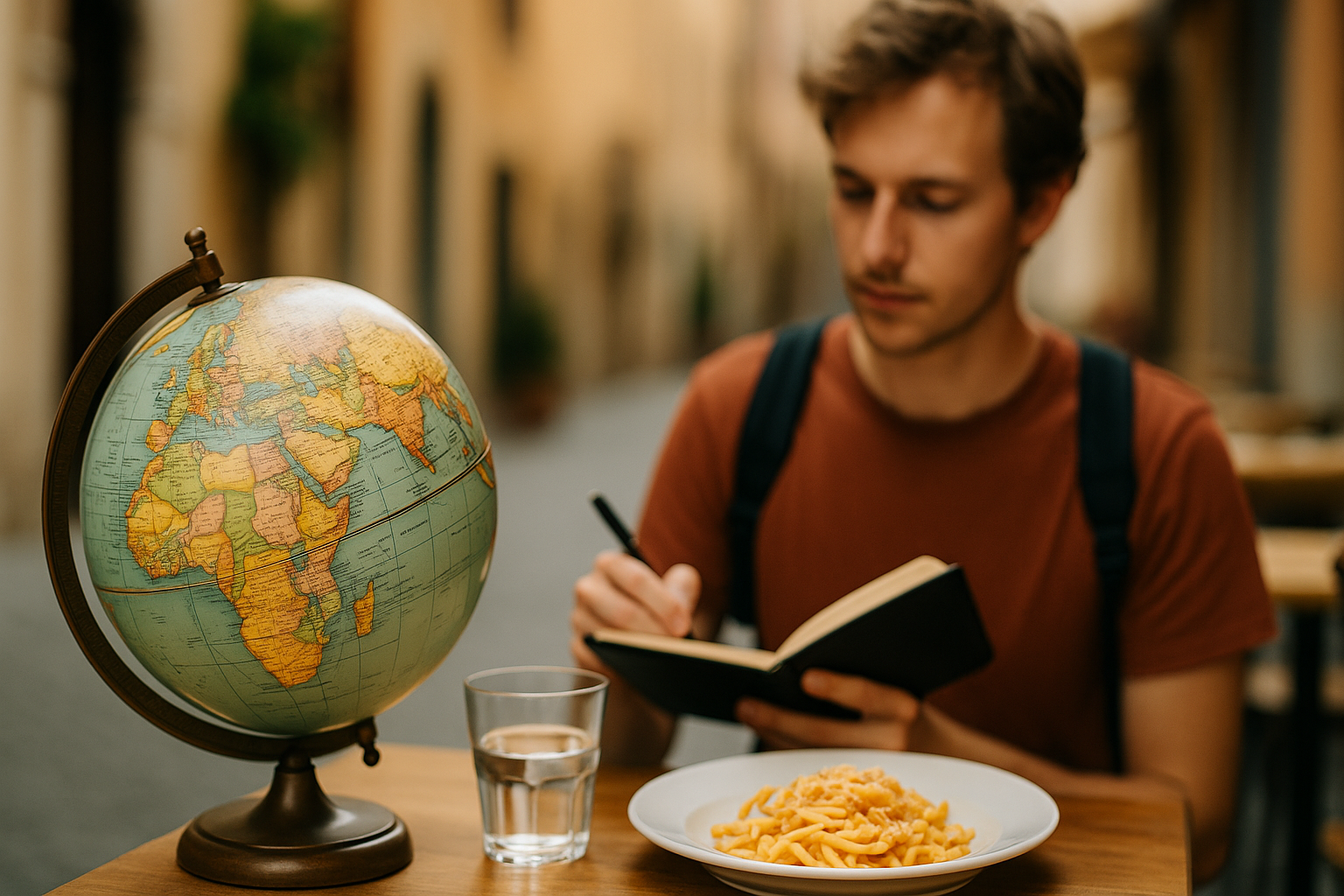
I landed in Barcelona with a suitcase, a basic grasp of Spanish, and absolutely no idea what living abroad would actually teach me. A month seemed like the perfect amount of time – long enough to feel immersed, short enough that I wouldn’t completely uproot my life. What I didn’t expect was how much this single month would reshape my perspective on everything from daily routines to what I thought I knew about myself.
Living abroad for a month sits in this unique sweet spot between tourist and resident. You’re past the honeymoon phase where everything feels magical, but not so settled that you’ve lost your sense of wonder. It’s long enough to develop real routines, face genuine challenges, and experience the kind of personal growth that only comes from being completely outside your comfort zone. Whether you’re considering a solo adventure or planning your first extended stay abroad, here’s what a month away from home taught me about adaptability, connection, and rediscovering joy in the mundane.
The First Week Reality Check
The first few days felt like an extended vacation. I explored famous landmarks, took excessive photos of my breakfast, and felt that intoxicating rush of being somewhere completely new. But around day five, something shifted. The novelty wore off just enough for reality to set in – I wasn’t on vacation. I was living here, even if temporarily.
This realization hit hardest when I needed to buy groceries and couldn’t find half the items on my list because I didn’t know the local brands or where anything was shelved. Simple tasks that took five minutes at home suddenly required planning, patience, and a willingness to look completely lost in the middle of a supermarket. I learned that living abroad isn’t about constant adventure. It’s about navigating the boring, necessary parts of life in an unfamiliar context.
The exhaustion was real too. People talk about jet lag, but nobody warns you about cultural fatigue – that bone-deep tiredness that comes from processing everything in a different language, decoding social norms, and staying alert in situations where you can’t operate on autopilot. By the end of week one, I understood why homesickness hits hardest after the initial excitement fades. You’re not homesick for your country – you’re homesick for ease, for understanding, for the comfort of competence.
Building Routines in Unfamiliar Territory
Week two brought an unexpected discovery: routines became my anchor. I found a local coffee shop that opened early, learned the baker’s schedule at the corner panaderia, and mapped out which grocery store had the best produce. These small rhythms transformed my temporary apartment from a place I was staying into somewhere that felt like mine.
What surprised me most was how much intentionality this required. At home, routines happen almost accidentally – you fall into patterns without thinking. Abroad, you have to actively create them. I designated Sunday mornings for reorganizing my space and planning the week ahead. I found a running route along the beach and committed to it three times a week. I picked a regular spot at my favorite cafe and became enough of a regular that the barista started preparing my order when she saw me walk in.
These routines did more than structure my days. They gave me a sense of belonging and progress. Each repeated action was proof that I wasn’t just passing through – I was living. The mundane became meaningful because I had chosen it, cultivated it, made it part of my temporary life in this new place.
The Language Barrier Breakthrough
I arrived with intermediate Spanish – enough to order food and ask for directions, but nowhere near conversational fluency. The first week, I relied heavily on English and hand gestures. But around day ten, something shifted. I stopped mentally translating every sentence and started thinking in Spanish, at least for basic interactions.
The breakthrough came during a misunderstanding at a local market. I was trying to buy tomatoes and accidentally asked for “tomates calientes” (hot tomatoes) instead of “tomates maduros” (ripe tomatoes). The vendor laughed, corrected me gently, and we ended up having a ten-minute conversation about cooking, Barcelona’s markets, and where I was from. That interaction taught me more about language learning than any app or class ever could.
I learned that fluency isn’t about perfection – it’s about willingness. The locals appreciated effort far more than accuracy. When I stumbled through a sentence, people didn’t judge me. They helped me, encouraged me, and often switched to simple Spanish rather than English, giving me the gift of practice. By week three, I was having real conversations, understanding jokes, and even picking up on the subtle differences between Castilian Spanish and Catalan that colored everyday speech in Barcelona.
This experience echoed what many study abroad students discover – language learning accelerates dramatically when it’s tied to real needs and authentic relationships rather than classroom exercises.
Redefining Connection and Loneliness
I expected to feel lonely living abroad solo for a month. What I didn’t expect was how this experience would completely reshape my understanding of connection. Yes, there were lonely moments – evenings when I wished I could share a beautiful sunset with someone who knew me well, or times when I craved conversation that didn’t require extra mental effort.
But I also discovered a different kind of connection. Brief exchanges with strangers became more meaningful. The produce vendor who saved me the best peaches. The elderly woman at the laundromat who showed me how to work the machines. The bartender who recommended his favorite neighborhood spots that tourists never find. These weren’t deep friendships, but they were real human connections that made me feel seen and welcome.
I also connected with other travelers and expats in unexpected ways. We shared a common experience of being outsiders, which created instant rapport. I met people at language exchanges, cooking classes, and random conversations in parks. Some connections lasted only an evening, others extended throughout my stay. All of them reminded me that loneliness isn’t really about being alone – it’s about feeling disconnected. And you can feel connected even in a city where you know almost no one.
The month abroad also forced me to get comfortable with my own company in a way I never had before. I ate dinner alone at restaurants without scrolling through my phone. I explored neighborhoods with no particular destination. I sat in parks and simply observed. This wasn’t loneliness – it was solitude, and I learned to treasure the difference.
Cultural Perspective Shifts
Living in Barcelona for a month revealed assumptions I didn’t even know I held. The way people approached time, for instance. Dinner didn’t start until 9 or 10 PM. Shops closed for siesta. Social plans were fluid, casual, never as rigidly scheduled as I was used to. Initially, this frustrated me. I wanted efficiency, punctuality, clear plans.
But gradually, I adapted. I learned that the Spanish approach to time wasn’t about disorganization – it was about prioritizing presence over schedule. When you met someone for coffee, you actually sat and talked until the conversation naturally ended, not until a predetermined hour. Meals weren’t something to rush through – they were experiences to savor. This shift in perspective about city life and daily rhythms fundamentally changed how I experienced each day.
I also noticed different attitudes toward work-life balance. People took their vacation time seriously. Lunch breaks were actual breaks, not emails eaten at your desk. Work was important, but it wasn’t everything. This wasn’t laziness – productivity was still valued – but there was a clearer boundary between professional and personal life that felt revolutionary coming from a culture where being busy is worn like a badge of honor.
These observations weren’t about one culture being superior to another. They were about recognizing that the way I’d always done things wasn’t the only way, or necessarily the best way. Different contexts call for different approaches, and being exposed to alternative ways of structuring daily life expanded my understanding of what’s possible.
Practical Skills and Self-Reliance
A month abroad accelerated my practical problem-solving skills in ways I never anticipated. When my apartment’s wifi stopped working, I couldn’t just call a familiar internet provider – I had to navigate customer service in Spanish, understand technical terminology I’d never learned, and advocate for myself in a foreign system. When I got mildly sick, I had to figure out the pharmacy system, explain symptoms in another language, and trust local remedies I’d never heard of.
These challenges built confidence. Each problem I solved independently proved I was more capable than I thought. I learned to navigate public transportation systems, understand neighborhood politics, find reliable local services, and handle unexpected situations without panic. The skills themselves were useful, but the real value was the self-assurance that came from knowing I could figure things out even in unfamiliar circumstances.
I also became more resourceful with limited resources. My temporary apartment had a tiny kitchen with minimal equipment, which forced me to get creative with meal preparation. I couldn’t rely on my usual grocery stores or familiar brands, so I learned to be flexible, experimental, and open to trying local alternatives. These constraints didn’t limit me – they expanded my capabilities and taught me I didn’t need perfect conditions to live well.
The Return and Reverse Culture Shock
Coming home after a month abroad was stranger than leaving. I expected to feel relieved, grateful for familiar comforts, happy to be back. Instead, I felt disoriented. Everything looked the same, but I had changed. Conversations felt oddly superficial. The pace of life seemed unnecessarily rushed. I missed the rhythm of Barcelona, the sound of Spanish conversations, the specific quality of Mediterranean light.
This reverse culture shock taught me something important: you can’t have a transformative experience abroad and return home unchanged. The growth you experience creates distance between who you were and who you’ve become. That gap is uncomfortable, but it’s also valuable. It means the experience mattered. It means you absorbed something real.
The key lesson from returning home was integration – taking what I learned abroad and weaving it into my everyday life. I maintained some routines from Barcelona, like slower morning coffees and later dinners. I practiced Spanish regularly to preserve my progress. I approached familiar situations with fresh eyes, questioning habits I’d always taken for granted. The month abroad didn’t end when I boarded the return flight. It became part of how I moved through the world.
What I’d Tell Someone Considering It
If you’re thinking about living abroad for a month, do it. Not because it will be easy or comfortable, but precisely because it won’t be. The discomfort is where the growth happens. The moments of confusion, frustration, and feeling completely out of your element are exactly the experiences that expand your capacity for adaptability and resilience.
Choose a place that genuinely interests you, not just somewhere Instagram-worthy. Pick a neighborhood rather than constantly moving around – depth beats breadth when you’re trying to actually live somewhere rather than tour it. Budget for experiences, not just things. Some of my most valuable moments cost nothing – conversations with locals, walks through unknown neighborhoods, afternoons in public parks watching daily life unfold.
Embrace the mundane parts of living abroad. Yes, visit the famous sites, but also figure out where locals buy groceries, how the bus system works, which cafe has the best coffee for the price. These ordinary experiences are what transform you from tourist to temporary resident. They’re what create the sense of truly inhabiting a place rather than just passing through it.
Be patient with yourself during the adjustment period. The first week or two will be harder than you expect. You’ll be tired, possibly homesick, and wondering if you made a mistake. Push through it. The transformation happens on the other side of that initial discomfort. By week three, you’ll have routines, favorite spots, inside jokes with locals, and a growing sense that you belong, at least temporarily, in this new place.
Finally, document the experience, but don’t let documentation overshadow living it. Write in a journal, take some photos, but also put the phone away and simply be present. Some of my most powerful memories from Barcelona are moments I never photographed – specific conversations, particular flavors, the exact quality of evening light on certain streets. Those undocumented moments are often the most transformative because you experienced them fully rather than mediating them through a screen.
Living abroad for a month won’t solve all your problems or completely reinvent your life. But it will show you that you’re more adaptable than you think, more capable of navigating uncertainty, and more open to different ways of being in the world. It will give you perspective on your home culture, your daily habits, and your assumptions about how life should be structured. Most importantly, it will prove that growth doesn’t require years – sometimes a single month in the right context can fundamentally shift your relationship with yourself and the world around you. If you have the opportunity, the resources, and even a whisper of curiosity, take it. The person you become during that month might surprise you in the best possible way.

Leave a Reply