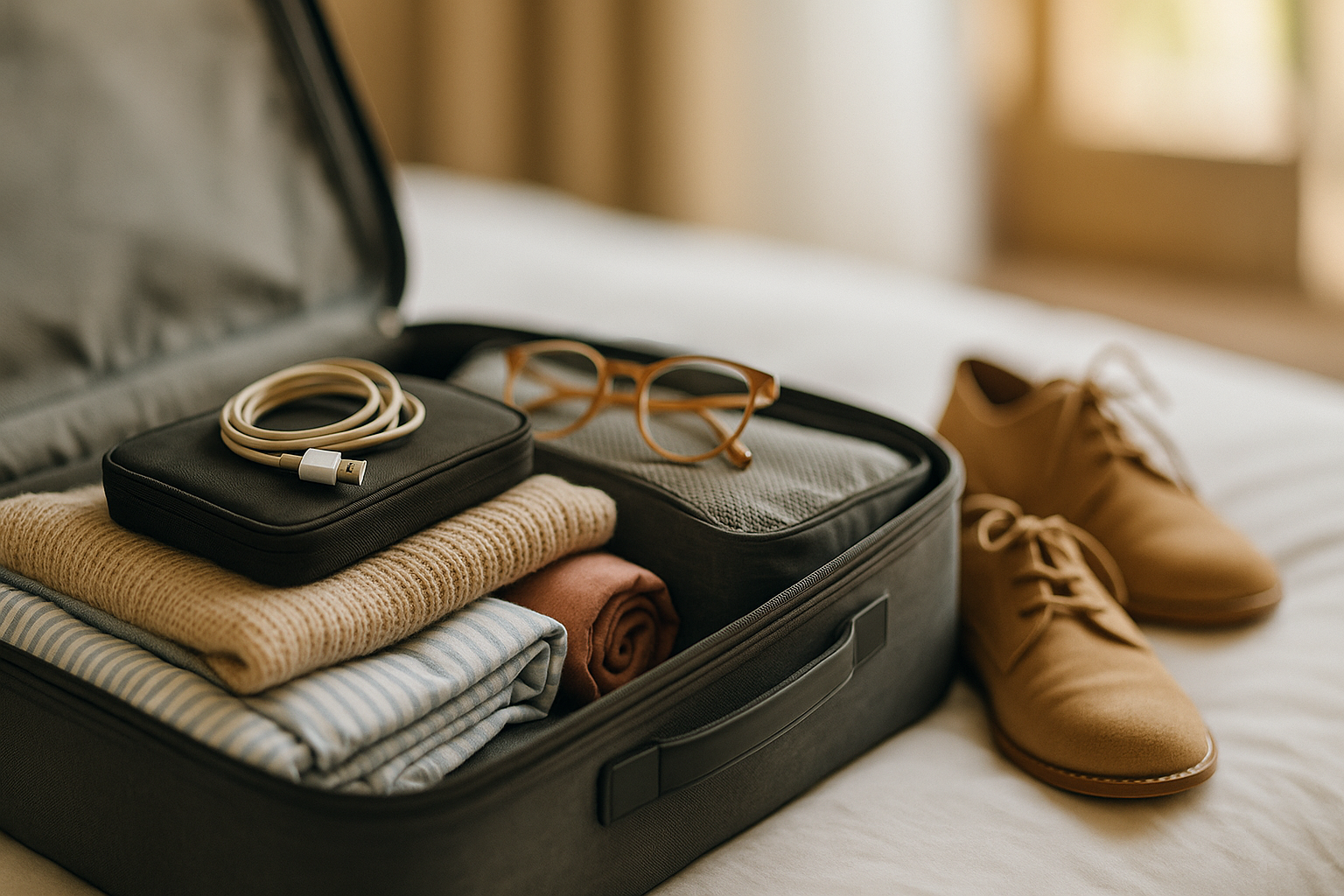
I used to be the worst packer. Seriously. Every trip turned into a comedy of errors – forgotten chargers, wrinkled clothes, overweight bags, and that sinking feeling of realizing I’d brought three pairs of shoes I’d never wear while leaving behind the one thing I actually needed. After years of trial and error (and a few embarrassing airport moments), I’ve finally cracked the code on packing smart.
These aren’t just tips I read somewhere and regurgitated. These are battle-tested hacks that have transformed my travel experience from chaotic to streamlined. Whether you’re a weekend warrior or a long-term nomad, these strategies will change how you approach your suitcase forever. The best part? Most of them cost nothing and take minimal effort to implement.
The Rolling Revolution That Actually Works
You’ve probably heard about rolling your clothes instead of folding them. But here’s what most people get wrong – they just roll everything loosely and call it a day. The real game-changer is the military roll technique, where you fold the item in half lengthwise first, smooth out all the air, and then roll it as tightly as possible starting from the bottom.
This method does three things simultaneously. First, it compresses your clothes more than you’d think possible, giving you about 30% more space in your bag. Second, it prevents wrinkles better than traditional folding because there are no hard creases. Third, it creates these neat little cylinders that you can stand upright in your suitcase, making it incredibly easy to see everything at a glance.
I learned this the hard way on a two-week trip to Europe where I was determined to use only a carry-on. By switching to proper rolling halfway through the trip, I suddenly had room for souvenirs I thought I’d have to ship home. Now I can fit a week’s worth of clothes in a bag that used to barely hold three days’ worth.
Packing Cubes: The Investment That Pays for Itself
I resisted packing cubes for years. They seemed like unnecessary clutter, just another travel gadget I’d use once and forget about. I was incredibly wrong. Packing cubes have become my non-negotiable travel essential, and I genuinely can’t imagine packing without them anymore.
The real benefit isn’t just organization – it’s the compression factor. Good quality packing cubes with compression zippers can squeeze your clothes down even further than rolling alone. I use a system where I dedicate different cubes to different categories: one for tops, one for bottoms, one for undergarments and socks, and one for workout gear or swimwear.
Here’s the kicker: when you arrive at your destination, you can literally just pull out the cubes and put them in drawers or leave them in your suitcase. No more unpacking everything and creating chaos in your hotel room. When you’re ready to move on, everything is already organized and ready to go. It’s like having a dresser that travels with you.
My Packing Cube Strategy
Not all packing cubes are created equal. After trying several brands, I’ve learned that medium-weight fabric with sturdy zippers works best. Ultra-lightweight cubes tend to rip, while heavy-duty ones add unnecessary weight. I use a set of three to four cubes in different sizes, and I’ve color-coded them so I can grab what I need without thinking.
One cube hack that changed everything: I keep one cube permanently packed with toiletries and basics that I never fully unpack. Between trips, it lives in my closet ready to go. This has eliminated countless “Did I pack my toothbrush?” moments and has saved me from buying overpriced travel-size items at airports.
The Outfit Formula That Eliminates Overpacking
The biggest packing mistake people make? They pack individual items without thinking about how they work together. I used to do this too, bringing seven different tops that each only matched one pair of pants. Then I discovered the capsule wardrobe approach for travel, and it revolutionized how I pack.
Here’s my formula: for a week-long trip, I pack three bottoms and six tops that all coordinate with each other. Everything mixes and matches, which means three bottoms and six tops give you 18 different outfit combinations. Add one or two layering pieces like a cardigan or light jacket, and you’re set for any situation.
The key is sticking to a cohesive color palette. I typically go with neutrals like black, navy, or gray for bottoms, and then add tops in colors that all work together. This doesn’t mean boring – it means intentional. A well-chosen printed scarf or statement jewelry can completely change the look of a basic outfit without taking up valuable suitcase space.
The One-Week Packing List That Works
Through countless trips, I’ve refined this to a science. For seven days, I pack three pairs of pants or shorts, six shirts (a mix of casual and slightly dressier options), one versatile dress or outfit for nicer occasions, seven sets of underwear and socks, two bras, one pair of pajamas, workout clothes if needed, and one light jacket or sweater.
For shoes, this is where I used to go overboard. Now I follow the rule of three maximum: the shoes I’m wearing (usually sneakers or comfortable walking shoes), one dressier pair, and if absolutely necessary, one activity-specific pair like hiking boots or flip-flops. Each pair has to serve multiple purposes. Those “just in case” shoes never get worn and always get left behind now.
The Shoe Stuffing Technique Nobody Talks About
Shoes are space wasters, but they’re also perfect storage containers that usually travel empty. This seems obvious once you know it, but it took me years to figure out. Now I stuff every pair of shoes with small items – socks, underwear, charging cables, or even delicate items that need protection.
This serves double duty: it maximizes space and helps shoes keep their shape during travel. I wrap the stuffed shoes in shower caps (those free ones from hotels are perfect for this) to keep the soles from touching clean clothes. If you don’t have shower caps, plastic grocery bags work just as well.
For particularly nice shoes or boots, I also stuff them with tissue paper or packing paper to maintain structure. The key is to think of every inch of your luggage as usable space, including the insides of items you’re already packing.
The Toiletry Bag Game-Changer
Toiletries used to be my packing nemesis. Leaked shampoo ruined clothes, I’d forget essential items, and I always seemed to bring way more than I needed. Now I use a systematic approach that has eliminated all these problems.
First, I switched to solid alternatives wherever possible. Shampoo bars, conditioner bars, and solid face cleansers take up minimal space, never leak, and last forever. For liquids I can’t replace, I use small silicone travel bottles that are actually leak-proof (test them at home first with water).
The organizing hack that changed everything: I keep my toiletries in a hanging bag with clear compartments. This lets me see everything at once, nothing gets lost in the bottom of the bag, and I can hang it on a bathroom door hook without unpacking anything. It’s particularly brilliant for quick overnight trips or when you’re moving between accommodations frequently.
The Minimal Toiletry List
Here’s what actually makes it into my bag now: toothbrush and toothpaste, shampoo and conditioner bars, face wash, moisturizer with SPF, deodorant, any prescription medications, basic makeup if needed, and a small first-aid kit with band-aids and pain relievers. That’s it. Everything else can be purchased at your destination if absolutely necessary.
I also keep a checklist saved on my phone for these items. Before every trip, I just run through it quickly. This simple step has saved me from countless forgotten essentials and has dramatically reduced the “did I pack that?” anxiety.
The Laundry Hack for Extended Travel
Once I accepted that doing laundry while traveling isn’t a failure but a strategy, my packing transformed. For trips longer than a week, I now pack for 5-7 days maximum and plan to do laundry once during the trip. This single mindset shift cut my luggage weight in half.
I carry a small, flat sink stopper and a small amount of concentrated laundry detergent in a leak-proof container. Hand-washing a few items in a hotel sink takes maybe 15 minutes, and clothes dry overnight if you hang them properly. For those who can’t stand hand-washing, most places have laundromats or hotel laundry services.
Quick-dry fabrics are essential for this strategy. Merino wool and synthetic blends dry in hours, not days. I’ve basically eliminated cotton from my travel wardrobe except for maybe one comfortable t-shirt. The investment in quick-dry clothing has paid for itself many times over in reduced luggage and increased flexibility.
The Electronics Organization System
Tangled cables and lost chargers used to plague every trip. Now I use a simple electronics organizer – basically a small zippered pouch with elastic loops – that keeps everything in one place. All my cables are wrapped with velcro ties to prevent tangling, and every charger has a label so I know what it’s for at a glance.
Here’s my electronics packing list: phone charger, portable battery pack, universal adapter if traveling internationally, headphones, and maybe a laptop or tablet depending on the trip. That’s it. I’ve stopped bringing “just in case” electronics that never get used.
One game-changing addition: a multi-port USB charger. Instead of carrying multiple wall adapters, I have one that can charge my phone, battery pack, and headphones simultaneously from a single outlet. This is especially valuable in hotels where outlets are scarce or awkwardly placed.
The Outfit Photography Method
This might sound excessive, but hear me out. Before a big trip, I lay out every outfit combination I’m planning to bring and take quick photos with my phone. This serves two purposes: it forces me to make sure everything actually coordinates, and it gives me a visual reference while traveling so I’m not trying to remember what goes with what.
This simple step has prevented so much overpacking. When I see the outfits laid out visually, I immediately spot redundancies or items that don’t actually work with anything else. It’s also incredibly helpful when you’re tired and just want to get dressed without thinking – you can just reference your outfit photos.
The Strategic Carry-On Loading
How you load your carry-on matters almost as much as what you pack. I follow a specific order: heavy items like shoes go at the bottom near the wheels, packing cubes fill the middle, and soft items like jackets or pajamas go on top. This keeps the bag balanced and prevents it from tipping over.
I also keep a small personal item or daypack with absolute essentials: medications, a change of underwear and shirt, valuable electronics, important documents, and any must-have toiletries. This way, if my checked bag gets lost or delayed, I can survive comfortably for a day or two without stress.
The top pocket or most accessible compartment gets my “in-transit” items: headphones, phone charger, book or e-reader, snacks, empty water bottle, and any paperwork I might need. Nothing worse than having to dig through a fully packed bag to find your boarding pass or headphones.
The Pre-Trip Packing Timeline
I used to pack the night before and inevitably forget things. Now I start three days out with a much more relaxed approach. Three days before, I make my list and start gathering items. Two days before, I do a test pack to make sure everything fits. One day before, I do a final check and add last-minute items.
This timeline eliminates panic packing and gives me time to realize if I’m missing something important. It also lets me wear and wash items one more time if needed. The mental peace of having packing handled well before departure is worth the slightly earlier start.
Making a list might seem basic, but I keep a master packing list template on my phone that I customize for each trip. This has eliminated the constant worry of forgetting something important. Over time, you refine the list based on what you actually use versus what just takes up space.
The Return Trip Strategy
Here’s something most people don’t think about: packing for the return trip. I always leave a bit of extra space in my luggage for souvenirs or items I pick up along the way. I also bring one lightweight, foldable extra bag that takes up almost no room but can serve as overflow if needed.
On the return journey, I use dirty clothes as padding for fragile souvenirs. Clothes that need washing anyway might as well serve double duty protecting that bottle of wine or delicate pottery. Just make sure to use items you were planning to wash regardless.
I’ve also started taking photos of how I packed initially, so I have a reference for fitting everything back in. There’s nothing worse than the panic of trying to repack at checkout time and having things mysteriously not fit anymore.
Putting It All Together
These packing hacks didn’t come together overnight. They’re the result of countless trips, mistakes, and gradual refinement. The beautiful thing is that you don’t have to adopt all of them at once. Start with one or two that resonate most – maybe it’s packing cubes or the capsule wardrobe approach – and build from there.
What I’ve learned is that good packing isn’t about fitting more stuff into your bag. It’s about bringing exactly what you need and nothing you don’t. It’s about reducing decision fatigue, eliminating stress, and having more mental energy to actually enjoy your travels. When you’re not worried about your luggage, you’re free to focus on the experiences that make travel worthwhile.
The next time you’re preparing for a trip, try implementing just a couple of these strategies. Start with the basics – rolling your clothes properly, using packing cubes, and creating outfit combinations before you pack. Once those become second nature, layer in the other techniques. You’ll be amazed at how much lighter, more organized, and more confident you feel with every journey. Happy travels, and may your bags always be perfectly packed and never lost by the airline.

Leave a Reply