Most people think they’ve seen America. They’ve visited New York City, explored the Grand Canyon, walked the beaches of California. But tucked away in corners of this vast country are places so extraordinary, so untouched by mass tourism, that even well-traveled Americans have never heard of them. These aren’t just “off the beaten path” destinations – they’re places that feel like secrets whispered between locals.
I’ve spent years seeking out these hidden gems, the kind of places where you won’t find tour buses or Instagram crowds. What I’ve discovered is that America’s best-kept secrets aren’t necessarily remote or hard to reach. They’re simply overlooked, overshadowed by their famous neighbors, or tucked away in regions most travelers skip entirely. Here are my absolute favorite hidden gems that deserve a spot on your travel bucket list.
Bisti Badlands, New Mexico
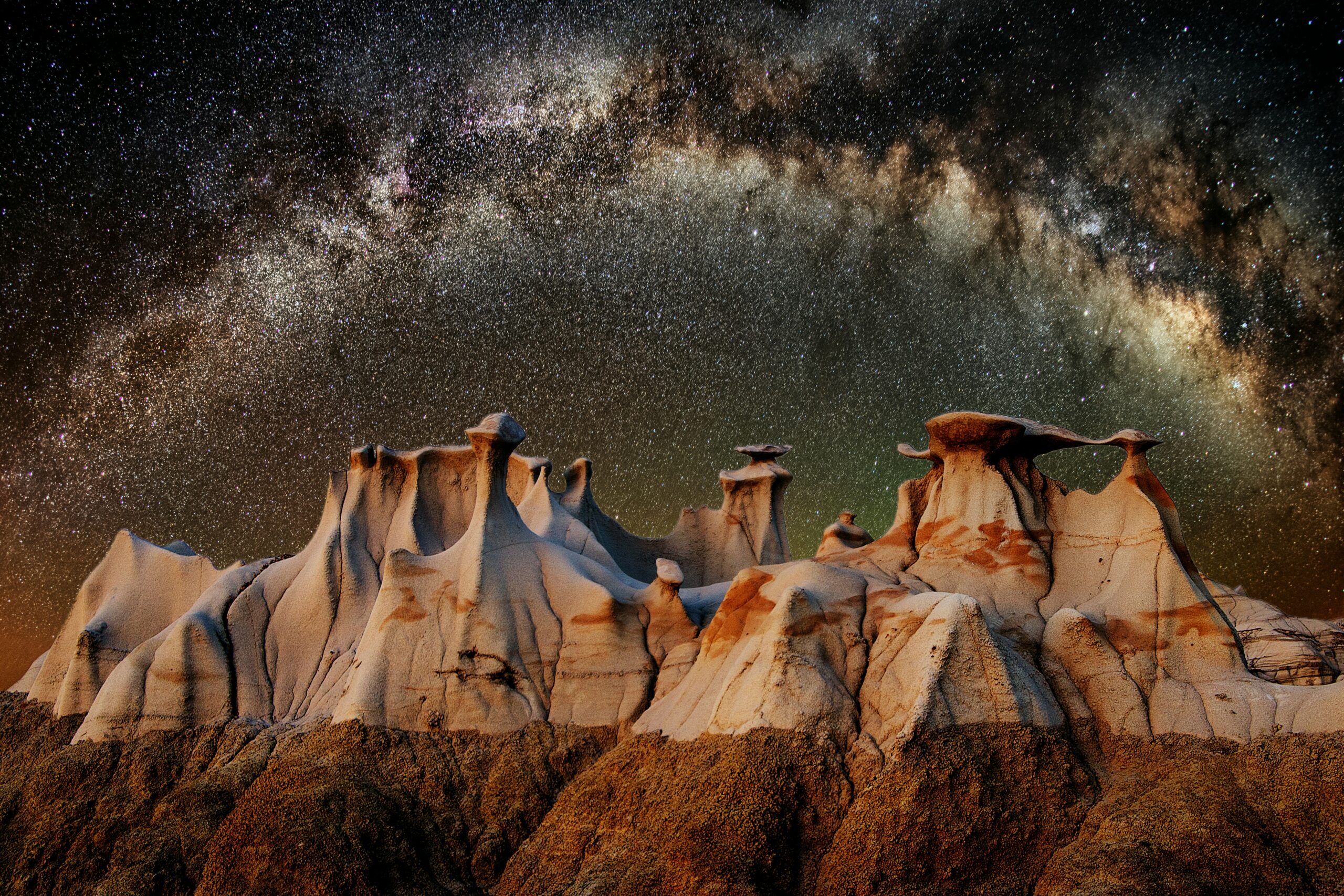
Forget everything you think you know about New Mexico. While most visitors flock to Santa Fe or Albuquerque, the Bisti Badlands lie in the northwestern corner of the state, looking more like an alien planet than anywhere on Earth. This 45,000-acre wilderness area features formations that took millions of years to create – mushroom-shaped hoodoos, petrified wood scattered like forgotten bones, and layers of sediment in colors that shift from deep gray to rust orange.
What makes Bisti truly special is its complete lack of infrastructure. There are no trails, no signs, no facilities. You park your car at a small dirt lot and venture into the wilderness with nothing but a compass and your sense of adventure. The freedom is intoxicating. I spent an entire day wandering through formations that looked like melting castles, never seeing another soul. The silence was so complete I could hear my own heartbeat.
The best time to visit is spring or fall when temperatures are manageable. Summer heat can be brutal, and the lack of shade makes it dangerous. Bring more water than you think you’ll need, download offline maps, and tell someone where you’re going. This isn’t a place for casual hikers, but for those willing to venture out, it’s absolutely unforgettable.
The Palouse, Washington and Idaho
Drive through eastern Washington and northern Idaho in late spring, and you’ll encounter one of America’s most unexpected landscapes. The Palouse is a region of rolling hills covered in wheat fields that create patterns so perfect they look painted. The hills rise and fall in gentle waves, striped with different shades of green, gold, and brown depending on the season and what’s planted.
Photographers worship this place, but hardly anyone else knows it exists. The small town of Palouse, Washington serves as a good base, though the real attraction is simply driving the backroads. Highway 195 offers stunning views, but the magic happens when you venture onto smaller county roads. Each turn reveals a new composition – a red barn perfectly positioned on a hilltop, a lone tree standing sentinel over miles of wheat, shadows racing across the undulating terrain.
Visit in late June for the deepest greens before harvest, or in September when golden stubble creates a different kind of beauty. The light at golden hour transforms the landscape into something almost surreal. I’ve watched the sun set over these hills three times, and each time felt like witnessing something sacred that belonged to me alone.
Cumberland Island, Georgia
Georgia has a coast, and it’s nothing like what most people imagine. Cumberland Island, accessible only by ferry from St. Marys, is the largest of Georgia’s barrier islands. Wild horses roam freely through maritime forests draped with Spanish moss. Pristine beaches stretch for miles without a single hotel or restaurant in sight. Abandoned mansions from the Gilded Age slowly crumble back into the landscape.
The National Park Service limits visitor numbers, which means the island never feels crowded even on peak days. I spent three days camping at the Sea Camp site, waking each morning to the sound of waves and wild turkeys calling from the forest. The beach was empty except for shells, driftwood, and the occasional wild horse wandering down to the water’s edge.
Dungeness Ruins, the remains of a Carnegie family mansion, stands as a haunting reminder of the island’s past. Nature has reclaimed most of it – trees grow through what used to be the great hall, and vines cover the crumbling walls. It’s beautiful in its decay, a testament to how temporary human ambitions are compared to the persistence of the natural world.
Book your ferry tickets well in advance, especially for weekend trips. Bring everything you need because there’s nothing to buy on the island. And prepare for a different pace of life – there are no cars, no WiFi, no distractions. Just you, the wilderness, and time moving at the speed it’s supposed to.
Marfa, Texas
In the high desert of West Texas, three hours from anywhere, sits Marfa – a town of less than 2,000 people that’s become an unlikely art mecca. Donald Judd, the minimalist artist, moved here in the 1970s and transformed abandoned military buildings into permanent installations. Today, Marfa draws artists, writers, and seekers who find something magical in its isolation and stark beauty.
The town itself is wonderfully strange. Galleries and boutique hotels occupy old storefronts along the main street. Food trucks serve surprisingly sophisticated cuisine. At night, people gather to watch the Marfa Lights, unexplained glowing orbs that appear in the desert and have baffled observers for over a century. Scientists offer various theories, but locals prefer the mystery.
What I love most about Marfa is how it refuses to make sense. It’s too remote to be an art destination, too small to support its number of excellent restaurants, too quirky to exist in conservative West Texas. Yet here it is, thriving on its own terms. I spent my evenings at the legendary Hotel Paisano, where James Dean stayed during the filming of “Giant,” sipping drinks and talking to artists who’d moved here from Brooklyn or Berlin.
Visit Chinati Foundation to see Judd’s installations – massive concrete boxes arranged in perfect rows that interact with the desert light in ways that shift throughout the day. The experience is meditative, almost spiritual. This is art that requires space and silence to truly understand.
The Apostle Islands, Wisconsin
Lake Superior holds secrets, and the Apostle Islands are among its best. This archipelago of 21 islands off the northern tip of Wisconsin features sea caves carved into red sandstone cliffs, pristine beaches, old-growth forests, and historic lighthouses. Most Americans have never heard of them, which is exactly what makes them perfect.
I kayaked to the sea caves on a calm August morning, paddling through arches and tunnels carved by millennia of waves. The water was so clear I could see fish swimming twenty feet below. Inside the caves, the light took on an otherworldly quality, reflecting off the water and illuminating the striated rock in shades of orange, red, and brown.
In winter, when the lake freezes, you can walk to the caves across the ice. Massive icicles form inside them, creating frozen cathedrals that draw photographers from around the world. I haven’t experienced this myself yet, but it’s high on my list for future adventures.
Several islands offer camping, and I highly recommend spending at least one night. Stockton Island has excellent beaches and a great trail system. Raspberry Island features a beautifully restored lighthouse where rangers give tours. The solitude is remarkable – even in summer, you can find entire beaches to yourself.
Valley of Fire State Park, Nevada
Everyone knows about Red Rock Canyon near Las Vegas, but just an hour further north lies Valley of Fire, Nevada’s oldest and arguably most spectacular state park. Ancient sandstone formations glow in shades of red so intense they seem to generate their own light. Petroglyphs created by ancestral Puebloans over 2,000 years ago still mark the rocks.
The park is small enough to explore in a day but complex enough to warrant multiple visits. Fire Wave, a formation of swirling red and white sandstone, requires a short hike across open desert. The payoff is worth every step – patterns in the rock that look like frozen flames, best photographed in late afternoon when the low sun intensifies the colors.
Mouse’s Tank trail leads to a natural basin where water collects after rains. Along the way, you’ll see some of the park’s best petroglyphs – bighorn sheep, human figures, and mysterious symbols whose meanings are lost to time. I spent an hour studying these ancient artworks, wondering about the people who created them and what they were trying to communicate.
Visit in November through March to avoid the extreme heat. Summer temperatures regularly exceed 110 degrees, and the exposed red rock amplifies the heat even further. Early morning offers the best light for photography and the coolest temperatures for hiking.
The Flint Hills, Kansas
Kansas gets dismissed as flyover country, a place to pass through on the way to somewhere more interesting. But the Flint Hills region in the east-central part of the state preserves one of the last remaining tallgrass prairie ecosystems in North America. It’s a landscape of subtle beauty that reveals itself slowly to those willing to pay attention.
The hills roll endlessly, covered in grasses that can grow over six feet tall by late summer. In spring, wildflowers carpet the prairie in waves of purple, yellow, and white. The sky dominates everything, stretching from horizon to horizon without interruption. Thunderstorms form in the distance and march across the landscape, visible for dozens of miles.
I drove the Flint Hills Scenic Byway in May, stopping frequently to walk into the prairie and experience the silence. It’s a different kind of quiet than you find in forests or deserts – the wind moves constantly through the grass, creating whispers and rustles that feel almost like conversation. Meadowlarks sing from fence posts, and if you’re lucky, you might spot bison at the Tallgrass Prairie National Preserve.
The small towns along the route – Cottonwood Falls, Strong City, Council Grove – offer glimpses of Great Plains history. Stone buildings from the 1800s still stand, and locals gather at diners that haven’t changed in decades. It’s America as it used to be, moving at a slower pace and largely unbothered by modern trends.
Planning Your Hidden Gem Adventure
These places require more planning than typical tourist destinations. You won’t find all-inclusive resorts or organized tour groups. That’s precisely what makes them special. Here’s what I’ve learned about visiting America’s hidden gems successfully.
Do Your Research
Without major tourism infrastructure, you need to be self-sufficient. Download offline maps before you go. Research weather patterns and seasonal considerations. Some of these places are dangerous in certain conditions – flash floods in desert areas, extreme heat in summer, impassable roads in winter. Knowledge keeps you safe and helps you time your visit for the best experience.
Embrace Flexibility
Hidden gems don’t always cooperate with tight schedules. Weather might force you to change plans. That trail you wanted to hike might be closed for maintenance. Roads might be rougher than expected. Build flexibility into your itinerary and treat unexpected detours as opportunities rather than frustrations.
Respect the Local Culture
Many of these places are hidden because they’re home to small communities that value their quiet way of life. Be respectful of local customs, support local businesses, and don’t treat residents as tourist attractions. Ask permission before photographing people or private property. Leave places better than you found them.
Pack Appropriately
Bring supplies you’d normally rely on towns to provide. Water, snacks, first aid kits, extra layers of clothing, backup batteries – these aren’t optional when you’re exploring remote areas. I carry a paper map as backup to GPS, and I always tell someone my plans before heading into wilderness areas.
Why Hidden Gems Matter
In an age of Instagram tourism and bucket list destinations, there’s something deeply satisfying about discovering places that haven’t been optimized for visitors. These hidden gems offer experiences that feel authentic because they weren’t designed for tourists. They exist on their own terms, indifferent to whether anyone appreciates them.
Every time I visit one of these places, I’m reminded that America is far more diverse and surprising than headlines suggest. Beyond the famous landmarks and crowded attractions lie landscapes and communities that tell different stories. The Palouse farmers who work the same land their grandparents farmed. The artists in Marfa who chose isolation over recognition. The rangers protecting the Apostle Islands for future generations.
These places have changed how I travel. I no longer chase famous landmarks or try to photograph iconic views that have been captured a million times before. Instead, I seek out the overlooked and underappreciated. I drive backroads instead of interstates. I talk to locals in diners instead of eating at chain restaurants. I accept that some experiences can’t be captured in a photograph and exist only in memory.
Your Next Adventure Awaits
America’s hidden gems won’t stay hidden forever. Social media has a way of discovering and overwhelming even the most remote places. But for now, these destinations offer something increasingly rare – the chance to explore without crowds, to experience wonder without commercialization, to feel like you’ve discovered something rather than just visiting it.
Start with one place from this list. Study maps, read about its history, understand what makes it special. Then go experience it for yourself, on its own terms, without expectations shaped by tourist brochures or Instagram filters. You might find that these hidden corners of America offer something the famous destinations can’t – a genuine sense of discovery and the space to experience the landscape without mediation.
The best journeys aren’t to the places everyone knows about. They’re to the places you have to seek out, the ones that require effort and intention to reach. These hidden gems have given me some of my most memorable travel experiences precisely because they demanded more from me and rewarded that effort with something authentic and transformative.
So skip the crowded national parks this year. Drive past the famous cities. Venture into regions that guidebooks dismiss. America’s greatest treasures aren’t always the ones everyone talks about. Sometimes they’re waiting in quiet corners, ready to reveal themselves to travelers willing to look beyond the obvious and embrace the unexpected.

Leave a Reply